Stress doesn’t always arrive with warning—and it rarely waits for a “perfect time” to deal with it. The most effective relief tools are the ones that work in real life: during a busy workday, between meetings, before sleep, or in the middle of a tense conversation. This guide organizes quick, evidence-informed techniques into four buckets—breathing, short meditations, grounding, and time management—so it’s easy to choose what fits the moment and get back a sense of control.
For more background on how stress affects the mind and body, the American Psychological Association has a helpful overview, and the National Center for Complementary and Integrative Health summarizes what research suggests about meditation and mindfulness.
Stress spikes are easier to interrupt when they’re small. A quick scan can prevent a reactive email, a tense conversation, or another hour of spinning thoughts.
Fast reset rule: when two or more signs show up at once, pause for a 60–120 second technique before making decisions or sending messages. Think of it as a short “system reboot” that improves whatever you do next.
Breathing drills are practical because they’re portable and discreet. They also give the body a clear cue that it’s safe enough to soften—especially when exhales are slow and unforced.
| Situation | Technique | How Long | What to Focus On |
|---|---|---|---|
| Racing thoughts | Box breathing (4-4-4-4) | 2–4 min | Equal counts, steady pace |
| Panic/air hunger | Physiological sigh | 30–60 sec | Long, relaxed exhale |
| Irritability/tension | Extended exhale (4 in, 6–8 out) | 2–5 min | Soft jaw and shoulders |
| Before sleep | Extended exhale or box breathing | 3–8 min | Slow, quiet breathing |
Meditation doesn’t have to be long to be useful. Short practices train attention to return—without needing to “solve” every thought that shows up.
Grounding works by shifting attention from spiraling thoughts into concrete, sensory information. The goal isn’t to force calm—it’s to create steadiness and orientation so the moment feels more manageable.
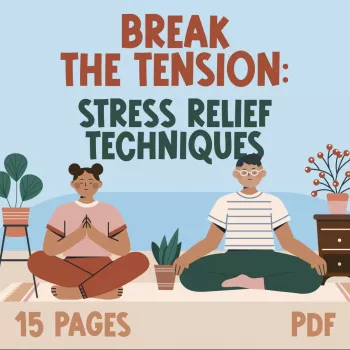
If you want a ready-made “pick one” menu for the body (breathing), attention (meditation/grounding), and workload (time management), consider: Break the Tension: Stress Relief Techniques – Breathing Exercises, Quick Meditations, Grounding Techniques, and Time Management Tips to Reduce Stress.
Small environment shifts can also support follow-through. Comfortable, non-restrictive clothing can make it easier to breathe low into the ribs and relax the shoulders during a reset: Women’s Wide-Leg Pants.
Try 2–5 rounds of the physiological sigh (about 30–60 seconds), then add a grounding step like pressing your feet into the floor for 10 seconds. Keep the exhale slow and comfortable rather than forced.
A small daily baseline (3–5 minutes) plus using a technique “in the moment” tends to work best. Pair a drill with a routine trigger (like opening your laptop) and track a quick before/after stress rating to see what helps fastest.
Yes—combine a 60–120 second nervous-system reset with one planning action, such as writing three priorities or setting an if-then start time for a task. That pairing reduces overwhelm and makes follow-through more likely.












Leave a comment