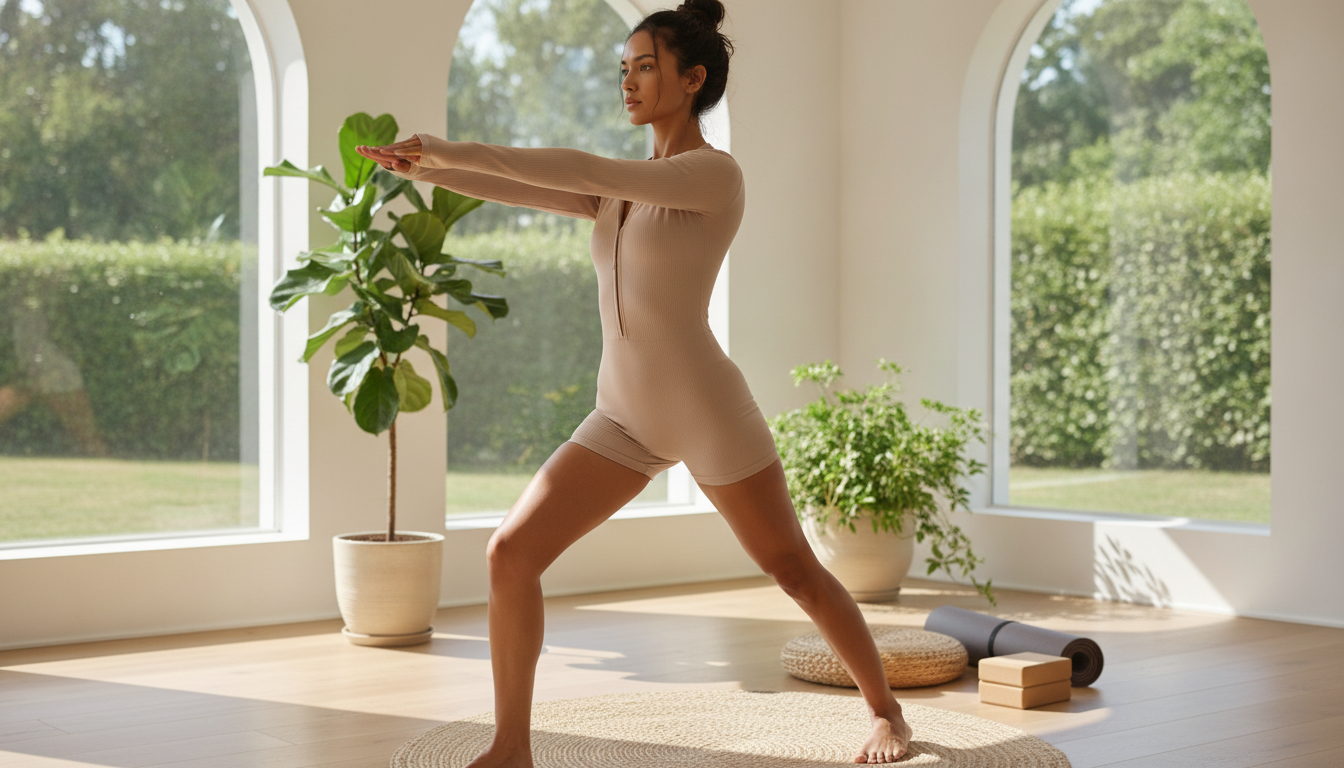
A long sleeve, one-piece jumpsuit can simplify getting dressed for movement—offering a streamlined fit, reliable coverage, and an easy transition from practice to errands. This guide breaks down what matters most: fit, fabric feel, mobility, layering, and care—plus a quick comparison to separate sets.
A one-piece yoga jumpsuit is designed to move as a single unit with your body. That may sound simple, but it changes how an outfit feels during real sessions—especially when you’re bending, twisting, or transitioning quickly.
Fit is the difference between “forget you’re wearing it” comfort and a constant need to tug, smooth, or adjust. Use these quick checkpoints before committing to a size.
If you’re between sizes, consider how you plan to wear it most often: a slightly more compressive fit can feel secure for yoga and pilates, while a touch more room may feel better for all-day wear and layering.
Because a jumpsuit covers more surface area than a typical set, fabric performance matters even more—especially if your practice runs warm or you like to wear athleisure beyond the studio.
For longer sessions, hydration and temperature awareness also play a role in comfort. Practical guidance from sources like the American Council on Exercise (ACE) and the Mayo Clinic can help you match your clothing choices to your workout intensity and environment.
The best jumpsuits disappear once you start moving—no pinching, no sliding, no distractions. Prioritize these performance-focused details.
A long sleeve one-piece reads clean and intentional, which makes it surprisingly easy to style outside of class. The goal is to keep the lines simple while adding one “street” element—like a jacket, structured bag, or different shoe.
For days when you want a looser, breezier bottom after practice, swap into Women’s Wide-Leg Pants for an easy post-studio silhouette that still feels polished.
| Feature | One-Piece Jumpsuit | Top + Leggings |
|---|---|---|
| Coverage during movement | Very stable; fewer slips or waistband shifts | Depends on waistband and top length |
| Outfit flexibility | Single look (easy, streamlined) | High (mix and match sizes/styles) |
| Layering convenience | Add layers over the full suit | Layer top/bottom independently |
| Packing for travel | One item = full outfit | Multiple items, more combinations |
| Best for | Yoga, pilates, errands, athleisure looks | Gym sessions, varied outfits, different sizing needs |
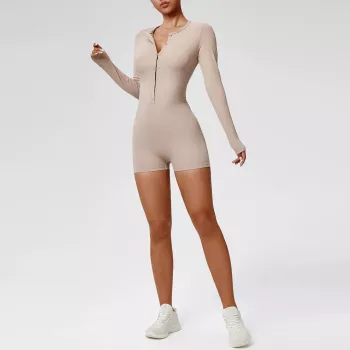
If you want an all-in-one piece that’s easy to wear, easy to layer, and comfortable for daily movement, the Women’s Long Sleeve One-Piece Yoga Jumpsuit is a streamlined option designed for practice and beyond.
For a quick change after class—especially if you’re heading straight to plans—having an alternate piece like Women’s Wide-Leg Pants in your bag can help you shift from fitted performance wear to relaxed street style in minutes.
It can be, but it depends on how breathable the fabric is and how warm you personally run. In a hotter room, long sleeves may feel warmer, so many people reserve this style for warm flow, lower-intensity classes, or studios with strong cooling.
It should feel snug but not restrictive, with enough torso length for overhead reaches and folds without pulling at the shoulders. Do a squat and forward-fold test—coverage should feel secure, and seams shouldn’t dig at the underarm, waist, or inner thigh.
Easy layers include an oversized button-down, denim jacket, hoodie, or a long coat for cooler weather. Finish with sneakers or boots and a simple bag to make the look feel more “street” than “studio.”









Leave a comment