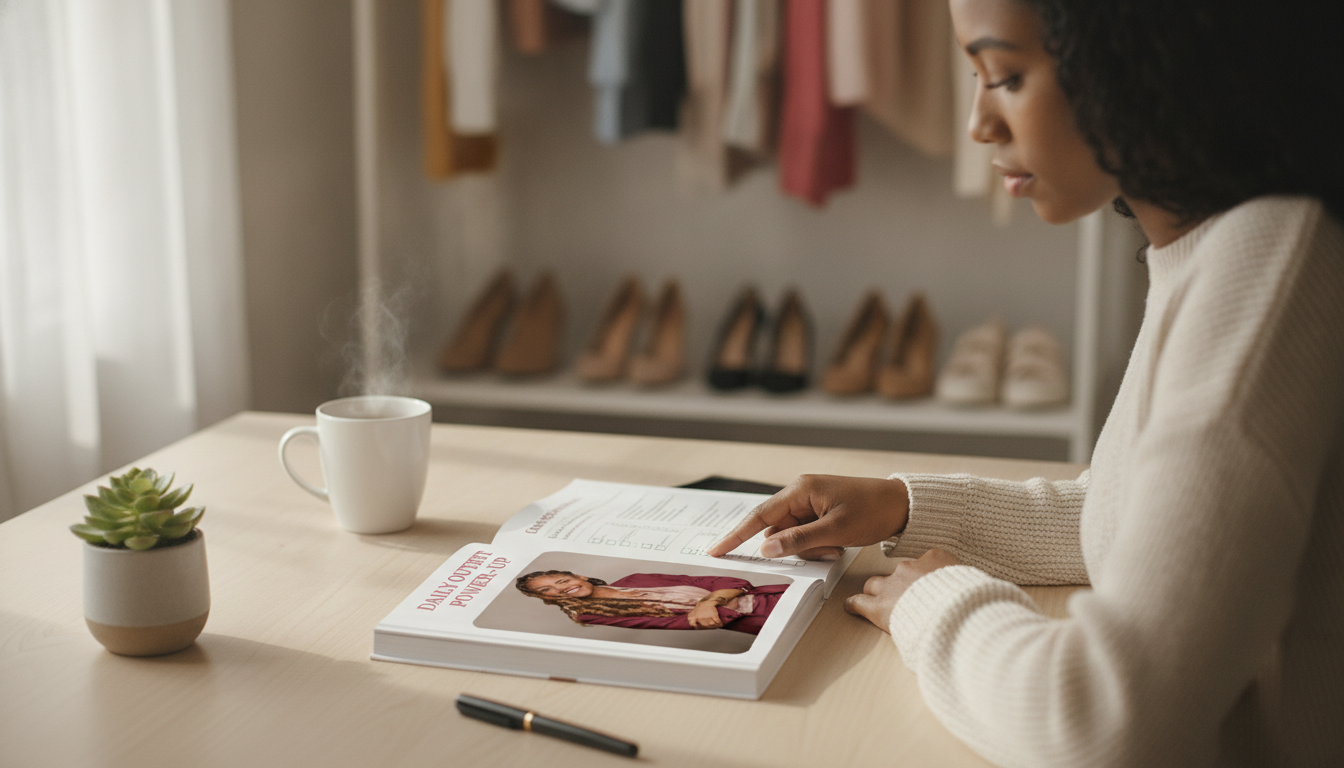
A quick, repeatable outfit routine can reduce morning decision fatigue while helping clothes feel more intentional instead of rushed. This checklist-style method focuses on fit, comfort, and the day’s schedule—so the final look works in real life, not just in the mirror. When choices feel endless, a simple order of operations lowers mental strain (often called cognitive load) and helps you avoid the “try-on spiral” that eats up time. For more guidance, see A Capsule Wardrobe Without Rules + FREE Printable.
This routine turns “nothing to wear” into a short sequence of small decisions: purpose, base, layer, shoes, finishing details. Instead of scanning your whole closet at once, you move step-by-step, which is especially helpful when decision fatigue kicks in (Britannica overview here). For further reading, see Capsule Wardrobe Checklist PDF: Complete Guide 2025.
It’s built for busy mornings, commuting days, school drop-offs, travel days, and anyone who’s tired of outfit resets. It works with minimalist closets, colorful wardrobes, capsules, trend-forward pieces, or a mix—because the goal isn’t “own less,” it’s “combine better.” If your closet is full but outfits feel repetitive, the checklist pushes you toward new pairings without forcing new purchases.
If you want a ready-to-use version you can keep on your phone or print for your closet door, the Daily Outfit Power-Up Checklist (digital download wardrobe guide) turns the routine into a simple, repeatable script.
Look at weather, activities, dress code, walking/standing time, and any quick-change moments. This keeps you from choosing a “cute outfit” that fails at 2 p.m. when you’re running errands or sitting in meetings.
Choose a top + bottom or a one-piece that matches your comfort level and the most demanding moment on your schedule. If you know you’ll be in motion, prioritize breathable fabric, non-pinching waistbands, and sleeves/straps that stay put.
Need an easy base that still looks pulled together? Try a flowy one-and-done piece like the Ankle-Length Sleeveless Casual Dress, then let your layer and shoes adjust the formality.
Structure is what makes an outfit look intentional fast. Add a blazer, cardigan, or denim jacket—or define shape with a tuck, belt, or waistband choice. Even a small tweak (like a half-tuck) can fix proportions without changing the whole outfit.
Shoes should match both the outfit vibe and your real movement needs—commute, errands, meetings, stairs, all of it. If your day includes a lot of walking, start with walkable pairs and select the one that best fits the look, not the other way around.
Pick one item that finishes the look: a bag, earrings, scarf, or watch. The point is to create a focal point without adding more decisions. One anchor detail signals “done” to your brain.
Raise your arms, sit, walk, and check transparency or visible lines under indoor lighting. If something pinches, pulls, rides up, or slips, it’s a no—future-you will be adjusting it all day.
| Minute | Focus | Quick check |
|---|---|---|
| 1 | Plan for the day | Weather + schedule + comfort |
| 2–3 | Choose a base | Fits the busiest moment |
| 4–5 | Add structure | Proportion feels balanced |
| 6–7 | Pick shoes | Walkable + matches vibe |
| 8 | Add one anchor detail | Look feels intentional |
| 9 | Fit & movement test | No pinching, pulling, slipping |
| 10 | Final scan | Make one change at most |
For a ready-made version you can use immediately, the Daily Outfit Power-Up Checklist | 10-Minute Outfit Planning Routine for Every Day | Digital Download Wardrobe Guide keeps the steps in one place so you don’t have to remember them when you’re tired.
Try wide-leg pants + a fitted tank/tee + a lightweight layer + streamlined sneakers or loafers. If you want a base that instantly reads current, start with Women’s Wide-Leg Pants and let the checklist guide the rest.
It works because the routine limits choices and follows a fixed order (day needs → base → layer → shoes → one finishing detail). The one-swap rule at the end prevents overthinking and stops you from restarting the whole outfit.
Yes—this approach works with any closet size because it focuses on choosing a base that fits your day and balancing proportion and comfort. More items can actually make it easier once you’re pairing intentionally instead of browsing randomly.
Check the weather and your schedule, then pre-select two base options so you’re not starting from zero. Set out shoes, and keep a small finishing kit (lint roller, stain pen, and a couple of go-to accessories) where you’ll see it on the way out.










Leave a comment